You saw the showroom demo—now picture it in your living room
In the store, the wall is flat, the lights are controlled, and the “art” looks calmer than a big black rectangle. At home, the TV has to work around windows, lamps, glare, and the spot you actually sit. That’s when small details start to matter: how bright the screen gets in daylight, whether the frame color matches your trim, and what the wall looks like when the display is off.
Before you buy, stand where the TV would go and look at it at 10 a.m. and 10 p.m. If you can’t control reflections or you watch a lot at night, the “disappears as art” promise can turn into a pricey compromise.
The first annoyance: it doesn’t look like “real art” in your lighting
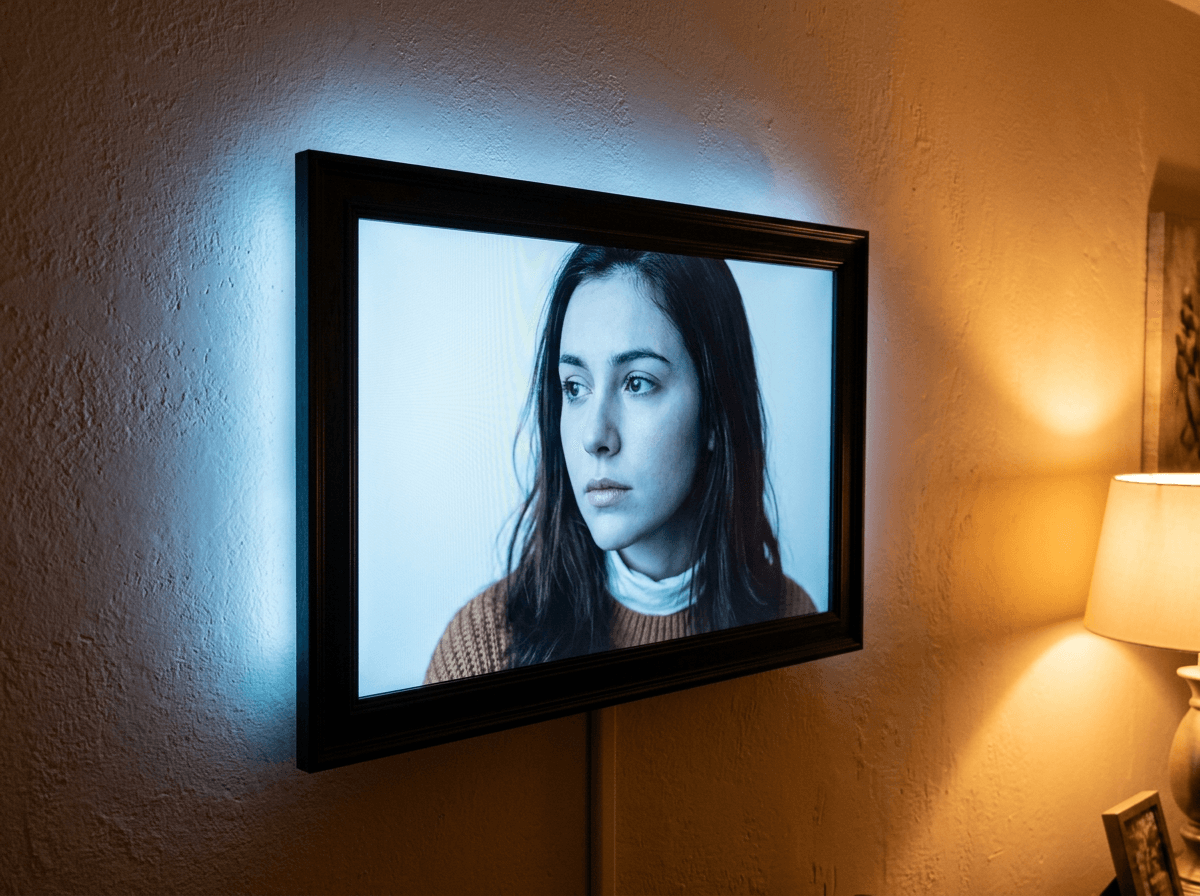
That “pricey compromise” usually shows up fast: you put it in Art Mode at night, turn on a couple lamps, and the piece looks like a bright tablet stuck to the wall. Real paper and canvas don’t glow. They pick up light, they lose contrast in corners, and they throw a little texture back at you.
If your room lighting is warm (2700K bulbs), but the display is set cooler, skin tones in portraits can look off and whites can feel bluish. If you have a window to the side, you may get a clean rectangle of glare that never appears on framed art. Even with an ambient light sensor, the screen can “hunt” for the right brightness when someone flips a lamp on or walks past.
The fix is usually manual: adjust color temperature, lower brightness, and pick art that forgives glow. Then you notice the next thing—whether the frame and mount actually sit flat enough to sell the illusion.
When the wall mount isn’t truly flush, the illusion breaks
When the mount leaves even a small gap, you see it from the side the same way you’d notice a picture frame that’s slightly tilted off the wall. In a showroom you’re usually straight-on. In a real living room you walk past it, sit off-center, or see it from the kitchen, and that shadow line along the edge gives away “TV” immediately.
The most common cause is the wall, not the bracket. Older drywall can bow, studs aren’t always perfectly even, and outlet covers sit proud. If the TV lands over a plate, a cable, or a slightly raised patch, one corner lifts. You can shim, but then the “frame” can start to look uneven, like it’s floating on one side.
Plan for a test-fit before you commit to final placement. If you’re renting, you may not be able to open the wall or move a box, and that limitation is often what pushes the decision into cable routing and power placement.
Cable routing is where “clean” installs become weekend projects
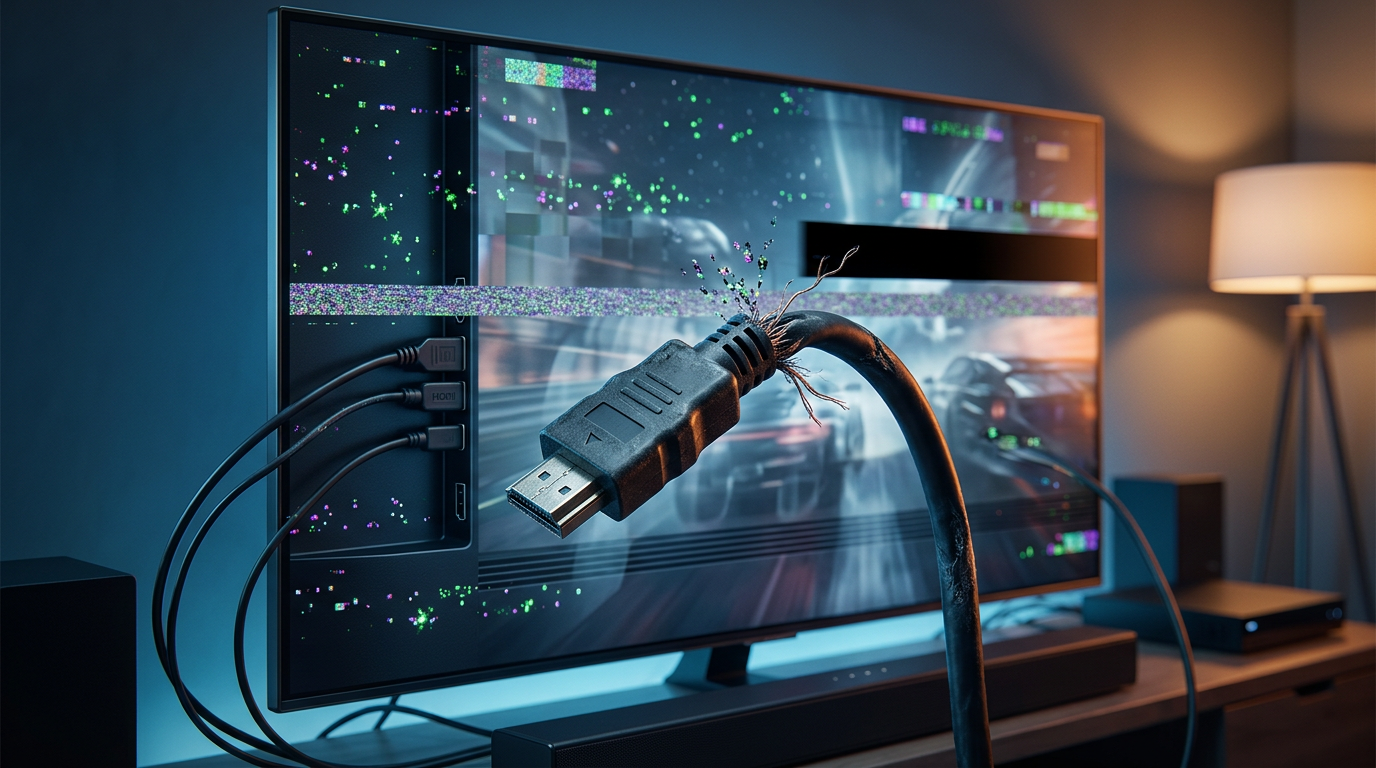
That “power placement” problem usually shows up as soon as you try to hide everything. The TV may sit flush, but one visible power cord or HDMI lead turns “art” into “electronics” from across the room. If the outlet is low on the wall, you either live with a drop cable, run a surface raceway, or start asking whether you’re willing to open drywall.
This is where a lot of clean installs become weekend projects. You measure, cut a pass-through behind the TV, then realize the power plug can’t legally run in-wall unless you use an in-wall power kit or add a recessed outlet box. If you’re in a condo or an older house, there’s also the fun of fire blocks, insulation, or studs that land exactly where you wanted the cable path.
And if you’re renting, you may be stuck. Landlords often won’t allow new outlets or big holes, and patching “small” cutouts still takes time, paint match, and patience. Once the cables are handled, the day-to-day question shifts to how Art Mode behaves when you actually live with it.
Art Mode: the features that feel clever… until you live with them
That “day-to-day” part is where Art Mode stops being a showroom trick and starts acting like another device you have to manage. A common scene: you walk into the room in the morning and the “art” is off because the motion sensor didn’t catch you from the hallway, or it turns on when the HVAC kicks on and you didn’t want it glowing. If you have pets, it can get worse—some setups trigger when a dog wanders through, so your “calm wall” becomes a screen that wakes up at random.
The clever bits also come with small chores. If the set relies on an ambient light sensor, you may still find yourself tweaking brightness per season because winter daylight and summer glare don’t land the same way. Some art libraries look great in the promo images, but you’ll spend real time filtering, favoriting, and re-cropping pieces so faces aren’t cut off by the mat effect.
At that point, you’ll notice the other side of the promise: how it behaves as a TV when the room goes dark.
Picture quality and usability trade-offs you notice at night
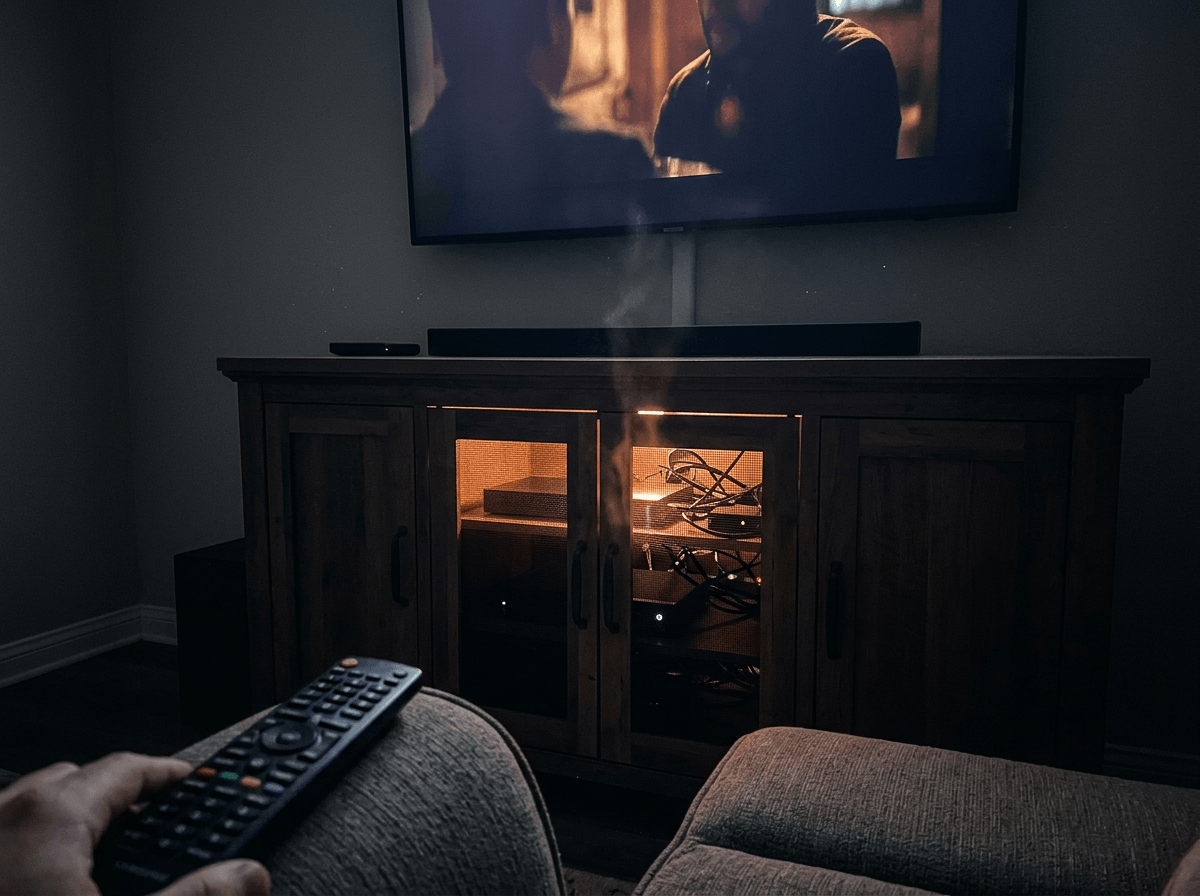
At night, you’ll usually switch from “looks like art” to “just show the movie,” and that’s when the compromise becomes obvious. In a dim room, a lot of art TVs can look a little gray in black scenes, and the screen may not hit the same punchy contrast you’ve seen on a good midrange TV. If you watch with lights off, you’ll notice blooming around subtitles, dark scenes that look flat, or a brightness limiter that makes the image feel restrained.
Usability can also get annoying in the dark. If the set tries to be clever about power states, you can end up pressing more buttons than you expect: Art Mode to TV, TV back to Art, then a quick trip into picture settings because the “art-friendly” choices don’t match your nighttime viewing. And if the “one connect” box (or a similar hub) has to live in a cabinet, you may deal with extra heat, a crowded shelf, or a remote that feels less responsive through doors.
If your default is evening viewing, that single habit should weigh as much as the wall aesthetics.
Make the call this month: art TV, normal TV + framed art, or wait
If your default is evening viewing, that habit should set your budget and your patience. If you watch most nights with the lights low and you care about deep blacks, buy a normal TV you love and treat the wall separately: hang one large framed piece (or a pair) and let the screen be a screen. If you mostly want a calm wall in daylight, can place power behind the set, and you’re okay fiddling with sensors and settings, an art TV can earn the premium.
If you’re renting, can’t hide cables cleanly, or you’re already wincing at the install plan, wait. Put the money into a better TV now and revisit art-mode hardware when your room—and your constraints—change.